
Introduction
The rising cost of petrol in Pakistan has become a serious concern for millions of people, especially those who depend on daily travel for work. From motorcyclists to small transport operators, increasing fuel prices have made it difficult to manage routine expenses. In response to this situation, discussions have emerged about a new relief initiative known as the Prime Minister Fuel Subsidy 2026.
This proposed subsidy aims to provide targeted financial support to low income groups so they can cope with the burden of high fuel costs. Many people are also linking this plan with welfare programs and searching for updates about eligibility, registration, and possible benefits. In this guide, you will find a clear and complete explanation of the current situation, based on available information, without confusion or exaggeration.
What is the Prime Minister Fuel Subsidy 2026
The Prime Minister Fuel Subsidy 2026 is a proposed relief plan designed to reduce the cost of petrol for selected groups in Pakistan. Instead of a general price reduction, the idea is to provide targeted support to those who need it most.
This initiative is expected to be linked with systems already used for social welfare, particularly the Benazir Income Support Programme, which maintains data of low income households.
The main purpose of this subsidy is to provide direct or indirect financial relief so that daily fuel expenses become more manageable for deserving families.
Official Status of the Fuel Subsidy Plan
At present, the fuel subsidy plan is not officially approved. According to available documents and reports, the government is still reviewing the proposal and working on a possible implementation method.
The document clearly indicates that the plan is under consideration. This means discussions are ongoing, and different options are being explored to design a system that is both effective and transparent.
It is important to understand that no final announcement has been made regarding the exact structure, timeline, or financial amount of this subsidy. Any claims suggesting confirmed payments should be treated with caution.
Who is Expected to Benefit from the Subsidy
Although the plan is still in progress, there are strong indications about the groups that may benefit.
Likely Beneficiaries
- Individuals registered under welfare databases
- Low income households
- Daily wage earners
- Motorcyclists and small vehicle users
- Rickshaw drivers
The aim is to focus on people who are most affected by rising fuel costs rather than providing universal subsidies.
Petrol Subsidy 3000 Reality Check
One of the most widely discussed topics is the claim of a fixed amount being provided as fuel subsidy. Many sources mention a specific figure, but there is no official confirmation of such an amount.
The available information does not mention any fixed payment like 3000. The proposal focuses on targeted relief rather than a flat cash transfer.
This confusion has mainly spread through social media and unofficial channels where incomplete information is often presented as confirmed news. It is always better to rely on official updates instead of unverified claims.
How the Fuel Subsidy May Be Implemented
Although the final method has not been announced, there are a few possible ways the subsidy could be delivered.
Possible Distribution Methods
- Direct transfer through banking system
- Digital wallet linked with CNIC
- Discount on fuel purchases
- Integration with existing welfare programs
Verification Process
- CNIC based identification
- Data matching through government records
- Eligibility confirmation before benefit
The government is likely to choose a system that ensures transparency and prevents misuse.
Expected Eligibility Criteria
While the official criteria have not been released, it is expected that eligibility will be based on similar standards used in other welfare programs.
Basic Requirements
- Low income household status
- Valid CNIC
- Registration in national data systems
Possible Exclusions
- High income earners
- Taxpayers with strong financial records
- Individuals not listed in official databases
The goal is to ensure that only deserving individuals receive the benefit.
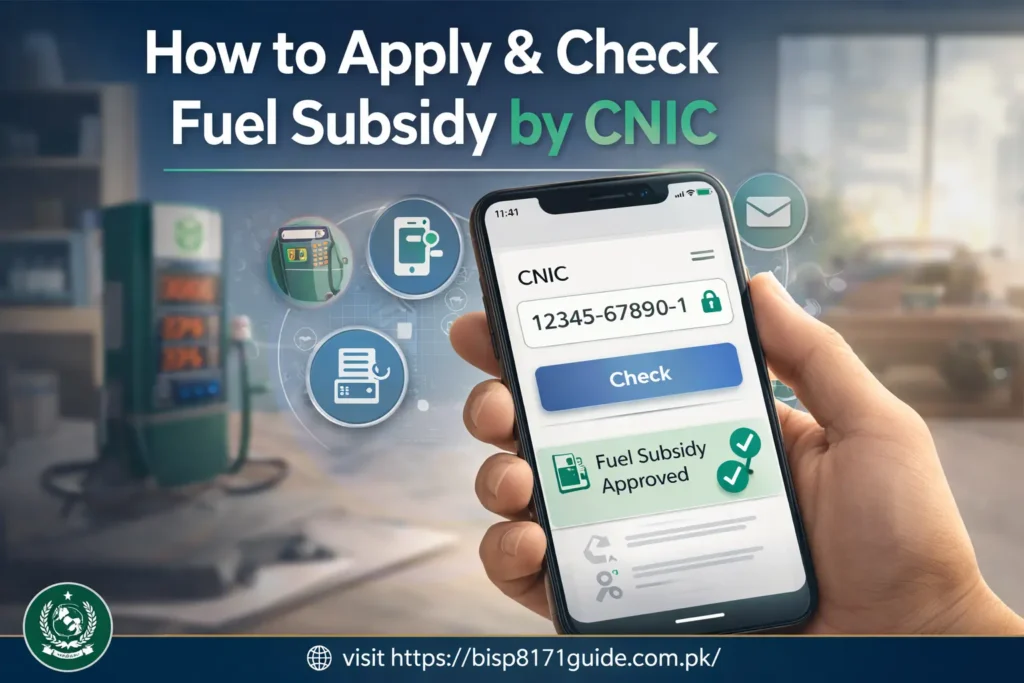
How to Check Fuel Subsidy Status
Since the program is not yet launched, there is no official system for checking status. However, based on previous programs, the process may follow a familiar pattern.
Expected Methods
- Online portal for CNIC verification
- SMS service for quick status check
- Bank or mobile app integration
Once the program is officially announced, clear instructions will be provided for checking eligibility and status.
Benefits of the Fuel Subsidy Initiative
If implemented, the fuel subsidy program can offer several important benefits.
Financial Relief
- Reduction in daily fuel expenses
- More savings for essential needs
Support for Workers
- Easier transportation for daily wage earners
- Reduced burden on small vehicle owners
Economic Stability
- Better financial balance for low income families
- Support during periods of high inflation
These benefits can make a significant difference in the lives of people who rely heavily on fuel for their daily activities.
Government Objective Behind This Plan
The main purpose of introducing this subsidy is to reduce the impact of rising fuel prices on the general public. Instead of applying a blanket reduction, the government is focusing on targeted support.
This approach helps in:
- Efficient use of resources
- Direct support to deserving groups
- Better control over subsidy distribution
It also reflects a shift towards digital and data driven welfare systems.
Challenges in Implementation
Implementing a fuel subsidy program on a large scale comes with several challenges.
Key Challenges
- Identifying genuine beneficiaries
- Preventing misuse of funds
- Managing system transparency
- Handling technical and operational issues
Despite these challenges, the use of digital verification systems can help improve accuracy and efficiency.
Comparison with Previous Relief Measures
In the past, fuel subsidies were often applied broadly, benefiting all consumers regardless of income level. However, this approach placed a heavy burden on the national budget.
The new proposed model focuses on targeted assistance, which is more sustainable and ensures that support reaches the right people.
Common Misunderstandings About the Fuel Subsidy
There are several misunderstandings that need to be clarified.
Common Confusions
- Belief that subsidy is already approved
- Expectation of immediate payments
- Assumption of fixed amount without confirmation
Understanding the actual status helps avoid confusion and false expectations.
Related Government Support Programs
The fuel subsidy proposal is expected to work alongside other welfare initiatives.
- Ehsaas Program
- BISP financial support system
- Rashan subsidy programs
These programs aim to provide comprehensive support to low income households across the country.
Frequently Asked Questions
Is petrol subsidy 3000 confirmed by govt of pakistan?
No, there is no official confirmation of any fixed amount.
Who will get fuel subsidy in Pakistan?
Low income households and registered beneficiaries are expected to qualify.
How to apply for fuel subsidy?
Application method will be announced after official approval.
How to check subsidy by CNIC?
A CNIC based system is expected once the program is launched.
When will fuel subsidy start?
The start date has not been officially announced yet.
Conclusion
The Prime Minister Fuel Subsidy 2026 is a proposed initiative aimed at providing relief to people affected by rising petrol prices. While the plan is still under consideration, it shows a clear intention to support low income groups through targeted assistance.
Until an official announcement is made, it is important to rely on verified information and avoid misinformation. Once the program is finalized, it is expected to provide meaningful support and help reduce the financial burden on deserving families.
